 Water Removal Colorado Springs
 Sewage Cleanup in Colorado Springs: Safe Removal & Disinfection
Last updated: September 2026
Price ranges are compiled from national cost guides and published local pricing as of September 2026. Sewage losses vary widely with affected area and materials — written on-site assessments are the only reliable numbers.
Why Sewage Is a Different Job Than "Regular" Water Damage
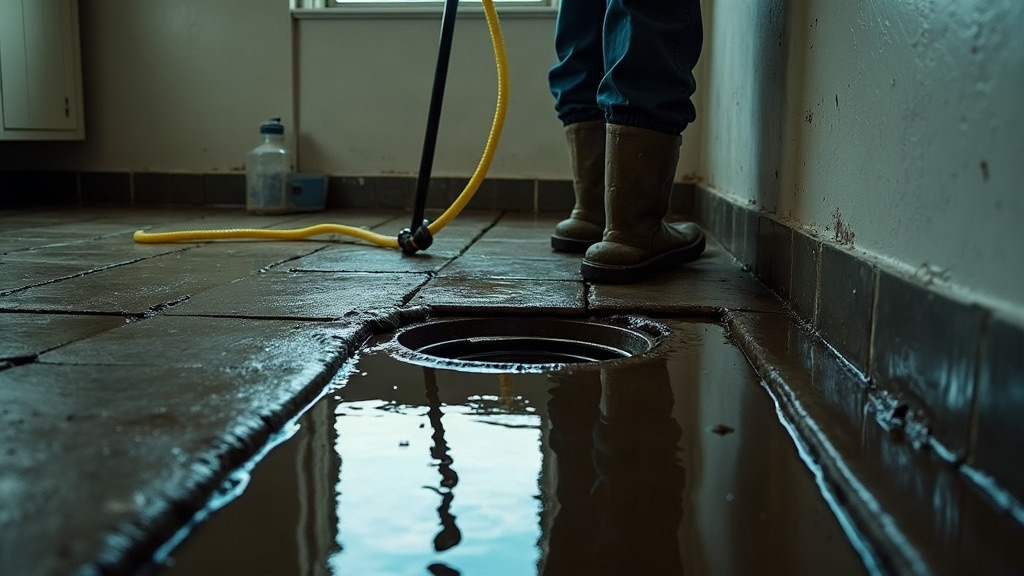
Restoration standards classify water in three categories. Category 1 is clean (supply lines). Category 2 is gray (appliance discharge, aquariums). Category 3 — black water — is sewage and ground flooding: it carries bacteria, viruses and parasites, and contact can make people seriously ill. That classification changes everything about the work.
Clean-water logic — extract, dry in place, save the materials — does not apply. Porous materials that black water touched are contaminated and come out: carpet and pad, drywall and insulation to the wick line, particleboard furniture, mattresses, upholstered goods. What remains gets cleaned, disinfected with antimicrobials, and then dried. Crews work in PPE with containment, and disposal follows biohazard handling, not ordinary demolition.
How Sewage Backups Happen in Colorado Springs
The local pattern has a few repeat offenders. Main line blockages and root intrusion in older neighborhoods — mature trees and aging clay or cast-iron laterals are a classic combination. Heavy monsoon rain overwhelming lines and pushing water back through floor drains. Sump and floor-drain failures during spring snowmelt, when saturated clay soils raise groundwater against basements. And septic system failures in outlying areas east and north of the city.
The basement connection matters: Colorado Springs homes typically have basements, and the lowest drain in the house is where a backup shows up first — which is why sewage losses here so often mean a contaminated finished basement. Our basement flood page covers the flooding side; this page covers the contamination side.
What Professional Sewage Cleanup Includes
- Safety isolation: occupants and pets kept out of the affected area; crew in protective equipment
- Extraction of sewage and contaminated water
- Removal and bagged disposal of all porous materials the water touched — carpet, pad, drywall to the wick line, insulation
- Cleaning of remaining hard surfaces, then antimicrobial disinfection
- Structural drying with air movers and dehumidifiers, plus daily moisture monitoring
- HEPA air filtration where aerosolization is a risk, and odor treatment
- Documentation: photos, moisture logs and disposal records for your insurance claim
Insurance and the Sewer Backup Endorsement
Here's the part that surprises homeowners: standard homeowners policies often exclude sewer and drain backups unless you added a specific endorsement (typically cheap — often $40–$100 a year for $5,000–$25,000 of coverage). Check your declarations page before assuming coverage, and if you don't have the endorsement, add it — in a city of basements and clay sewer laterals, it's among the best-value coverage available.
Whether covered or not, document everything before cleanup starts and keep the remediation company's moisture logs and disposal records. Companies experienced with insurance — most on our companies page — will help assemble the claim file.
What You Can Safely Do Yourself
Realistically: keep everyone out of the area, stop using water fixtures upstairs (everything you flush joins the backup), turn off HVAC to avoid circulating contaminated air, and call a professional. A small toilet overflow contained to a tile floor is the outer edge of reasonable DIY — gloves, detergent, disinfectant, thorough drying. Anything that touched carpet, drywall or a floor drain system belongs to a crew with PPE and antimicrobials.
Also worth doing once the crisis passes: a backwater valve on the main line (a plumber install, typically $1,000–$2,500) physically prevents municipal backups from entering your home, and a sewer line camera inspection ($150–$400) finds root intrusion before the next storm does. Compare that to the cost ranges above.
Frequently Asked Questions
How much does sewage cleanup cost in Colorado Springs?
Typically $2,000–$10,000+, roughly $7–$14 per square foot, because contaminated porous materials are removed and discarded rather than dried. A finished basement with a main-line backup is at the high end; a contained bathroom backup at the low end.
Is it safe to stay in the house during sewage cleanup?
Usually yes if the affected area can be isolated (a basement with a door, a single bathroom) and the HVAC isn't circulating from that zone. If contamination is widespread, involves living areas, or anyone in the home is immunocompromised, staying elsewhere until clearance is the cautious call.
Does homeowners insurance cover sewage backup in Colorado?
Only if your policy includes the sewer and drain backup endorsement — it's excluded from many base policies. The endorsement is inexpensive relative to the risk; check your declarations page and add it before you need it.
Can carpet be saved after a sewage backup?
No. Industry standards treat carpet and pad touched by Category 3 water as non-restorable — they are removed and discarded. Hard surfaces like tile can be cleaned and disinfected; anything porous cannot be reliably decontaminated.
Water Damage? Call (719) 716-8388 Now
One call — no forms, no waiting for a callback. Describe the damage and get connected with Colorado Springs restoration help. Prices and the companies behind them are on our cost page and top-picks comparison.
Call (719) 716-838824/7 — speak with a local specialist now