 Water Removal Colorado Springs
 Water Damage in Colorado Springs Homes: Signs, First Steps & the Four Local Scenarios
Last updated: September 2026
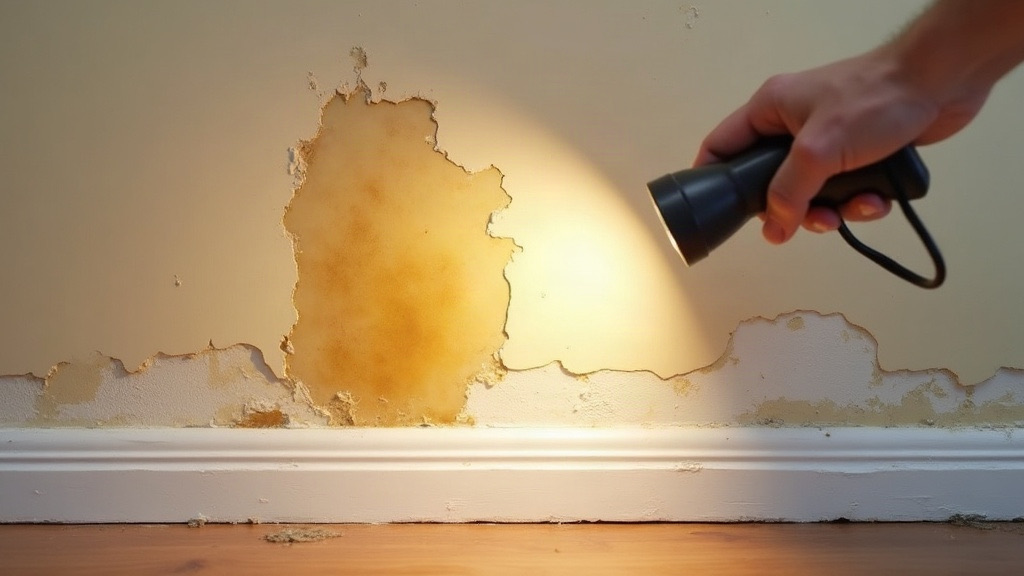
Early Signs of Water Damage in Walls
Water damage announces itself quietly before it announces itself expensively. The reliable early signs: staining — yellow-brown rings or streaks on drywall or ceilings that grow between rains; bubbling or peeling paint, where moisture lifts the paint film off the wall; swollen or separating baseboards, because MDF and wood wick water upward; drywall that feels soft or crumbles at a touched spot; and a persistent musty odor, which often arrives before anything is visible at all.
Ceilings deserve special attention in Colorado Springs: hail-damaged roofs and ice dams let water track along rafters and decking, so the stain on your bedroom ceiling may sit rooms away from the actual entry point. A stain that grows after storms is active. One that's dry, unchanged for years and coin-sized is usually an old, fixed event — photograph it and watch it through one storm season to be sure.
The invisible version matters most: slow leaks inside walls — a pinhole in a supply line, a sweating pipe in a crawl space — show up first as odor and slightly warped trim, months before a stain. If a room smells musty and nothing is visible, that's a moisture-meter job, not a wait-and-see job.
First Steps When You Find Water Damage
Stop the source. Plumbing leak: close the main shut-off. Roof leak: contain the drip (buckets, plastic sheeting) and get a tarp on the roof — most restoration companies do emergency tarping. Appliance: its fixture valve, then unplug it.
Protect people before property. Keep everyone out of standing water near outlets or appliances; kill power to the affected area only from a dry location. If the water came from a drain or the ground, treat it as contaminated — our sewage cleanup page explains why the rules change.
Document, then mitigate. Photos and video of everything before anything moves. Then call a 24/7 line — drying started within 24 hours is the difference between a drying job and a mold job. The verified numbers are on our emergency water removal page, and price expectations on the cost page.
Scenario 1: Freeze-Thaw and Burst Pipes (October–April)
Colorado Springs winters are a pipe stress test: overnight lows well below freezing, daytime highs above it, repeat for months. Water in a stressed pipe freezes, expands, splits the pipe — and the split often announces itself only at thaw, when pressurized water pours into the wall, ceiling or crawl space. The classic victims: supply lines in exterior walls, crawl spaces, uninsulated garage-adjacent walls, and hose bibs left connected.
Prevention is genuinely cheap here: disconnect hoses before the first freeze, insulate exposed lines, keep the thermostat no lower than the mid-50s when traveling, and know where your main shut-off is before you need it at 3 a.m. If a pipe does burst: main off, power to the area off if safe, 24/7 line called. A burst supply line moves hundreds of gallons an hour — it is the one scenario where minutes literally price the job.
Scenario 2: Hail and Monsoon Roof Leaks (July–August)
Colorado's monsoon season builds afternoon thunderstorms over the mountains and drops them on the city — intense rain, often with hail. Hail bruises shingles and cracks flashing; wind-driven rain finds every compromised valley and vent boot. The result is the Front Range's signature summer loss: water through the roof deck, along the rafters, and into ceilings and wall tops.
Two local rules. First, after any significant hailstorm, get the roof inspected even without interior signs — bruised shingles leak later, not now, and insurance claim windows are finite. Second, ceiling stains after storms are active until proven otherwise. Roof tarping is standard emergency scope for the companies on our comparison page, and a roofer-plus-restoration combination (several local companies do both) simplifies the claim.
Scenario 3: Snowmelt, Clay Soils and Basement Seepage (Spring)
Spring melt saturates the ground, and the Front Range's expansive clay soils hold that water against foundations instead of draining it away. Hydrostatic pressure does the rest: water enters through the cove joint where wall meets floor, through cracks, and through window wells. Basements — which most Colorado Springs homes have — take the hit.
Seepage is the scenario homeowners most often under-react to: a damp wall line or a puddle that "always dries up." Recurring seepage is a drainage problem with a fixable cause — grading, downspout extensions, crack injection, interior drain tile — and each event raises the mold stakes. The full playbook is on our basement flood cleanup page.
Scenario 4: Sump Pump Failure
In homes that rely on a sump pump, the pump is the single point of failure between a dry basement and a flooded one — and it fails at the worst time by design, since storms bring both the water and the power outages. Stuck float switches and simply old pumps (7–10 year realistic lifespan) account for the rest.
The defenses are cheap relative to a finished-basement loss: test the pump each spring (pour a bucket into the pit, watch it cycle), install a battery backup pump, and add a water alarm. If the pump has failed and the pit is overflowing, the response is the same as any flood: extraction first, and the 24/7 lines on our emergency page handle exactly this call every spring.
Mold After Water Damage: The 24–48 Hour Rule
Mold spores are everywhere; all they need is wet material and time. On damp drywall, carpet pad or insulation, colonization can begin within 24–48 hours. Colorado's dry ambient air helps surfaces dry quickly — a genuine local advantage — but moisture trapped inside wall cavities, under flooring and in insulation is sheltered from that dry air and keeps feeding growth regardless.
Practical consequences: dry fast and verifiably (moisture-meter readings, not touch); remove what can't be dried within that window; and treat any musty odor after a "dried" loss as a finding, not a nuisance. Full details on the mold remediation page and its cost companion.
Insurance Basics for Colorado Water Damage
The short version, since policy language decides everything: standard homeowners policies generally cover sudden and accidental water damage — burst pipes, appliance failures, storm-opened roofs. They generally exclude groundwater flooding (separate flood insurance), sewer backups (separate endorsement — worth having in a city of basements), and long-term neglected leaks (maintenance, not an event).
Do three things in every claim: document before cleanup, report promptly, and keep the restoration company's moisture logs and disposal records — they're the evidence trail. Most established local companies bill insurance directly and know exactly what adjusters need. What no honest company will do is promise you that "insurance covers everything" before your adjuster has said a word.
What to Verify in a Company (Colorado Has No Restoration License)
Colorado does not license water damage restoration as a trade, so "licensed" claims mean little on their own. Verify instead: IICRC certification of the technicians (the industry's actual training standard); general liability insurance; a written scope with moisture readings before full approval; and a verifiable local address. Where the job touches plumbing or reconstruction, those trades pull permits locally through the Pikes Peak Regional Building Department — ask who is pulling them.
The companies on our companies page were screened on exactly these criteria. For the money side — what extraction, drying, mold and sewage work should cost — the cost guide has the honest ranges.
Frequently Asked Questions
What are the early signs of water damage in walls?
The reliable early signs are yellow-brown staining that grows between rains, bubbling or peeling paint, baseboards swelling or pulling away from the wall, drywall that feels soft at a touched spot, and a persistent musty odor — which often arrives before anything is visible. A musty room with no visible stain usually means a slow leak inside the wall, and that is a moisture-meter job, not a wait-and-see job.
Does water damage in walls always lead to mold?
Not always — but the window is short. Mold can begin colonizing damp drywall, insulation or carpet pad within 24–48 hours of getting wet. Colorado Springs' dry air helps surfaces dry quickly, but moisture trapped inside wall cavities is sheltered from that dry air. If materials are verifiably dried within that window, mold usually never starts; if a musty smell appears weeks after a "dried" leak, assume hidden moisture until a moisture meter says otherwise.
Can water damaged drywall be saved, or does it have to be replaced?
Drywall wet with clean water and dried within 24–48 hours can often be dried in place and saved. Drywall that has swollen, crumbled or sagged, stayed wet longer than that, or was touched by contaminated (sewage or ground) water comes out — professionals make a "flood cut" above the wick line. Ceiling water damage repair follows the same rule, with sagging added as an immediate removal trigger because of the collapse risk.
How can I tell if a ceiling stain is from an active leak?
Watch it through one storm: an active stain grows, darkens or feels damp after rain, while an old, fixed stain stays dry and unchanged. In Colorado Springs, ceiling stains after hail-season storms are active until proven otherwise — hail-bruised shingles and cracked flashing leak later, not immediately. Mark the stain edges with a pencil and date them; it takes the guesswork out and documents the timeline for insurance.
Who should I call first when I find water damage?
If water is actively coming in, shut off the source and call a 24/7 restoration line first — drying is the time-critical step, and the verified numbers are on our emergency water removal page. A plumber repairs the pipe itself, which can happen in parallel. For a slow, contained issue (a growing stain, a musty wall), start with an assessment from a restoration company with moisture meters, and check price expectations on our cost page.
Sources
- U.S. EPA — Mold and Moisture guidance — mold basics, the ~10 sq ft DIY threshold, cleanup principles
- IICRC — the certification body behind the S500 water damage restoration standard
- Published pricing and cost-guide data, September 2026 (see cost page methodology note)