 Water Removal Colorado Springs
 Basement Flood Cleanup in Colorado Springs
Last updated: September 2026
Price ranges are compiled from national cost guides and published local pricing as of September 2026; see the main cost page for methodology.
Why Colorado Springs Basements Flood
Unlike some markets where basements are rare, most Colorado Springs homes have them — and the Front Range stacks the odds against them. Spring snowmelt saturates the region's expansive clay soils, building hydrostatic pressure that pushes water through wall-floor joints, cracks and window wells. July–August monsoon storms drop inches of rain in an afternoon, faster than grading and gutters can move it away.
Sump pump failure is the cruel one: pumps die during exactly the storms that need them, from power outages, stuck float switches or simple old age. And burst pipes in freeze-thaw season often release water at basement level — utility rooms and crawl-space-adjacent lines are favorites. Add water heater failures (average tank life 8–12 years, and they fail at the bottom) and you have the complete local greatest-hits list.
What Professional Basement Flood Cleanup Looks Like
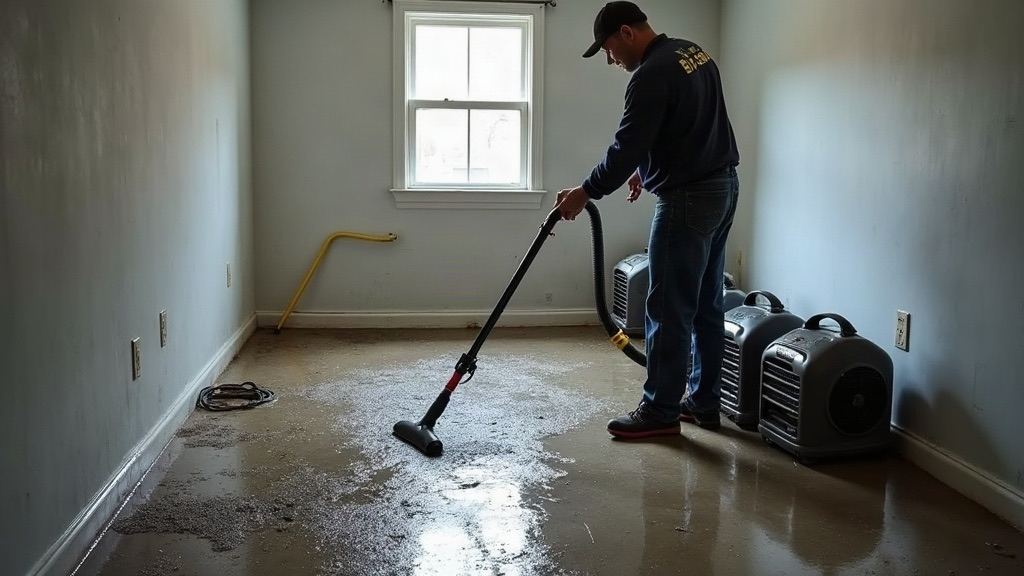
Extraction comes first — submersible pumps and truck-mounted extractors for deep water, then wands for the remainder. Assessment follows: moisture meters map how high water wicked in the drywall (often inches above the visible line) and whether insulation behind it is wet.
Removal is next for finished basements: carpet and pad, the bottom section of drywall (a "flood cut"), wet insulation, swollen baseboards and any particleboard. Unfinished basements skip most demolition and go straight to drying. Drying runs two to five days with air movers and dehumidifiers, monitored daily with logged readings. If the water was contaminated — a floor-drain backup or ground flooding — disinfection joins the scope; see sewage cleanup for what changes.
The Mold Clock in a Dry Climate
Colorado's dry air genuinely helps dry a basement fast — but mold doesn't need humid air, it needs wet material, and it can colonize damp drywall and insulation within 24–48 hours. A finished basement dried within a day of the flood usually keeps its walls; the same basement discovered after a weekend away usually doesn't.
That's the whole economics of fast response: extraction and drying at $2,000–$5,000 versus demolition, mold remediation and rebuild at $10,000+. If the basement smells musty weeks after a flood that "dried on its own," that's the hidden-moisture problem announcing itself — our guide covers the warning signs.
Prevention That Actually Works Here
- Service the sump pump annually and add a battery backup — it's the cheapest flood insurance in a snowmelt-and-monsoon climate
- Grade soil away from the foundation (6 inches of drop over 10 feet) and extend downspouts at least 6 feet out
- Seal the easy entries: window well covers, foundation crack injection, and the wall-floor cove joint where seepage starts
- Insulate exposed pipes in crawl spaces and garage-adjacent walls before freeze-thaw season
- Replace aging water heaters proactively and set the tank in a drain pan
- Install water leak sensors near the water heater, sump pit and washing machine — a $30 sensor beats a $7,000 cleanup
Finished vs Unfinished: Why the Bill Differs
An unfinished basement flood is mostly an extraction-and-drying job: concrete floor, exposed framing, few porous finishes — often $1,500–$4,000. A finished basement multiplies everything: carpet and pad come out, drywall gets flood-cut, insulation behind it gets replaced, and the rebuild adds flooring, paint and trim on top. It's common for a finished-basement loss to run $7,000–$15,000 all-in before furniture.
Two implications. First, document contents separately — furniture and stored belongings are a distinct part of the insurance claim. Second, if you're finishing a basement in this climate, spend the marginal dollars on moisture-tolerant details: a proper vapor barrier, composite or vinyl flooring instead of carpet, and paperless drywall in below-grade rooms. Compare contractors on our companies page and price the work against our cost guide.
Frequently Asked Questions
How much does it cost to clean up a flooded basement in Colorado Springs?
Typically $2,000–$7,000+ for extraction, drying and removal of damaged materials; unfinished basements often come in lower ($1,500–$4,000), finished basements higher, especially with reconstruction. Contaminated water (floor-drain backup, ground flooding) adds disinfection scope.
Does homeowners insurance cover a flooded basement?
It depends on the source. Burst pipes and appliance failures: usually covered. Sewer or drain backup: only with the specific endorsement. Groundwater seepage and overland flooding: excluded from standard policies — that requires separate flood insurance. Document the source carefully; it determines the answer.
How long does it take to dry out a flooded basement?
Professional structural drying typically runs two to five days with daily moisture monitoring. "Feels dry" is not the standard — crews dry to measured dry-standard readings, because moisture trapped in wall cavities is what grows mold weeks later.
Can I just use fans and a shop vac for a basement flood?
For an inch of clean water on bare concrete, possibly — with a pump or wet vac, fans, a dehumidifier and several days. Once water has touched finished walls, carpet or insulation, or came from a drain backup, DIY stops being adequate: the part you can't see (inside walls, under pad) is the part that molds.
Water Damage? Call (719) 716-8388 Now
One call — no forms, no waiting for a callback. Describe the damage and get connected with Colorado Springs restoration help. Prices and the companies behind them are on our cost page and top-picks comparison.
Call (719) 716-838824/7 — speak with a local specialist now