 Water Removal Colorado Springs
 24/7 Emergency Water Removal in Colorado Springs
Last updated: September 2026
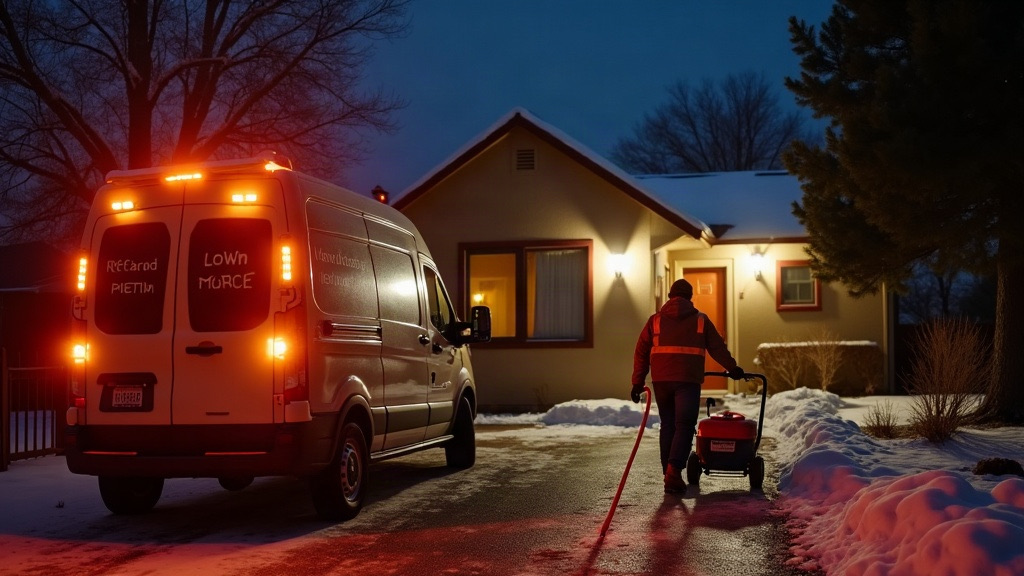
The First 60 Minutes: A Checklist
- Stop the source. For a burst pipe or failed supply line, close the main water shut-off (usually where the line enters the house, often in the basement or crawl space). For appliance failures, the fixture shut-off valve works too.
- Stay out of the water. Do not wade into standing water near outlets, appliances or the electrical panel. If you must kill power, do it from a dry location — or wait for the crew.
- Call a 24/7 line. Numbers verified from each company's own site are listed below. Ask two questions: estimated arrival time and any after-hours premium.
- Document before anyone touches anything. Photos and video of the water, the source and every damaged room — your insurance claim starts here.
- Move what you safely can. Lift furniture onto blocks or foil, pull rugs and valuables out of the wet zone — only if you can do it without entering deep or electrically risky water.
- Call your insurer. Report the loss early; most restoration companies here bill insurance directly and will help document.
Verified 24/7 Emergency Lines in Colorado Springs
These numbers are published on each company's own website and were verified in September 2026: SERVPRO of Central Colorado Springs — (719) 521-2595; BELFOR Colorado Springs — (719) 447-0888; Paul Davis Restoration — (719) 698-4862; United Water Restoration Group — (719) 418-2271; 1-800 WATER DAMAGE — (719) 684-9200; PuroClean of Central Colorado Springs — (719) 208-3773; RestoPros of Colorado Springs — (719) 867-8920; CMS Restoration — (719) 538-5607; RARE Restoration — (719) 695-5816.
Can't reach one, or want to compare first? Profiles and listed services for each are on our top-picks page and the companies directory. Save this page — in a freeze-thaw city, the night you need it is not the night to go searching.
What the Emergency Crew Actually Does
Extraction first. Truck-mounted or portable extractors pull standing water out — the single most important step, since every hour of standing water soaks deeper into drywall, subfloor and framing.
Then the science part. Moisture meters map what's wet — including wall cavities and under flooring, where you can't see it. Air movers and dehumidifiers run for two to five days, with daily monitoring and logged readings until materials hit dry standard. Unsalvageable materials (soaked carpet pad, swollen particleboard, anything touched by sewage) come out. Contaminated losses get antimicrobial treatment. You should receive the moisture logs — they are also your insurance documentation.
The Four Colorado Springs Emergency Scenarios
Burst pipes in freeze-thaw season. October through April, overnight lows plunge and daytime thaws stress pipes until one splits — usually in an exterior wall, crawl space or uninsulated garage line. A burst supply line releases hundreds of gallons an hour: shut the main off first, call second.
Monsoon roof and ceiling leaks. July and August thunderstorms — often with hail — open up roofs and valleys. Water tracks along rafters and appears as a ceiling stain rooms away from the entry point. Tarping the roof is part of most companies' emergency scope.
Spring snowmelt into basements. Saturated clay soils push hydrostatic pressure against basement walls and floors; water enters through cracks, window wells and the cove joint. Details on our basement flood cleanup page.
Sump pump failure. Pumps fail during exactly the storms that need them — power outages and stuck floats are the usual culprits. If your basement relies on a pump, a battery backup is the cheapest flood insurance you can buy. Sewage in the water? That changes the playbook — see sewage cleanup.
Choosing a Company at 2 A.M. Without Getting Burned
Urgency compresses your vetting time, not your standards. Even at 2 a.m., three checks take ninety seconds: the company has a verifiable local address (not just a call center), the person on the phone can tell you the estimated arrival window and any after-hours premium, and the crew will provide a written scope with moisture readings before you approve the full job.
Two things to avoid: signing a full reconstruction contract in the middle of the emergency (mitigation now, rebuild bids later — see our cost page), and paying a large deposit before equipment is placed. Emergency mitigation is standard insurance-claim work; legitimate companies document first and bill insurance directly.
Frequently Asked Questions
How fast should an emergency water removal crew arrive in Colorado Springs?
Most established companies target one to four hours inside the metro, depending on weather and how many calls a storm has generated. During citywide events (a hard freeze snap, a major hailstorm), ask for the realistic window and whether they can walk you through mitigation steps by phone while you wait.
Does emergency water removal cost more at night?
Some companies charge an after-hours premium; many do not, since emergency response is their core business. Ask before dispatch. Note that emergency mitigation to prevent further damage is generally expected — and covered — under standard homeowners policies.
Can I wait until morning to call about standing water?
You can, and many people do — it's the most expensive form of patience. Every hour of standing water wicks deeper into drywall, subfloor and framing, and mold can begin within 24–48 hours. Overnight is exactly when the difference between a drying job and a demolition job gets decided.
Should I call a plumber or a restoration company first for a burst pipe?
Shut off the main, then call the restoration company — extraction and drying are time-critical. The plumber repairs the pipe itself, which can happen in parallel or after; restoration companies deal with burst-pipe losses constantly and many will coordinate the plumbing repair.
Water Damage? Call (719) 716-8388 Now
One call — no forms, no waiting for a callback. Describe the damage and get connected with Colorado Springs restoration help. Prices and the companies behind them are on our cost page and top-picks comparison.
Call (719) 716-838824/7 — speak with a local specialist now